
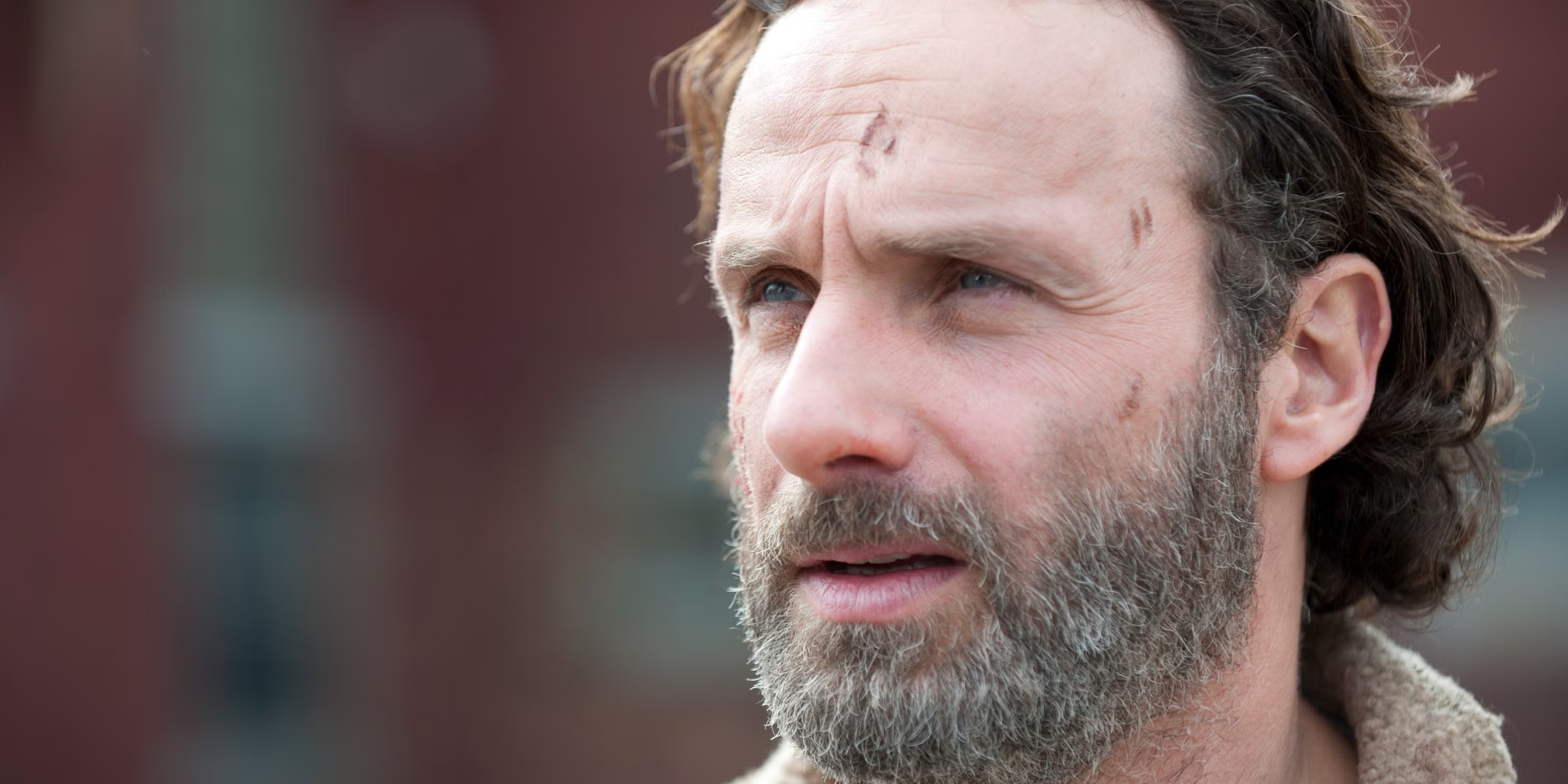
The Walking Dead Almost Rewrote Rick Grimes’ Most Iconic Speech: yes, the Season 4 finale’s train car scene almost ended with Rick Grimes and Morgan Jones reunited. According to showrunner Scott Gimple, Morgan Jones was supposed to be inside the same car when Rick declared, “they’re screwing with the wrong people,” only to smile back with, “yeah, they are.” Lennie James’ scheduling conflicts stopped that version from being filmed, leaving Rick’s line to stand alone.
Did Morgan appear in the Season 4 finale? No. In the aired version, he did not appear in the Terminus train car. The reunion was planned, but production logistics made it impossible, so the writers saved Morgan for Season 5 instead.
This is the kind of alternate ending that sounds like a perfect fan-service payoff, the sort of move that makes online comment sections light up and then vanish into debate. The fun is not just that Morgan survived. It is that he would have turned Rick’s most famous declaration into a full-circle moment with one of the show’s earliest survivors.
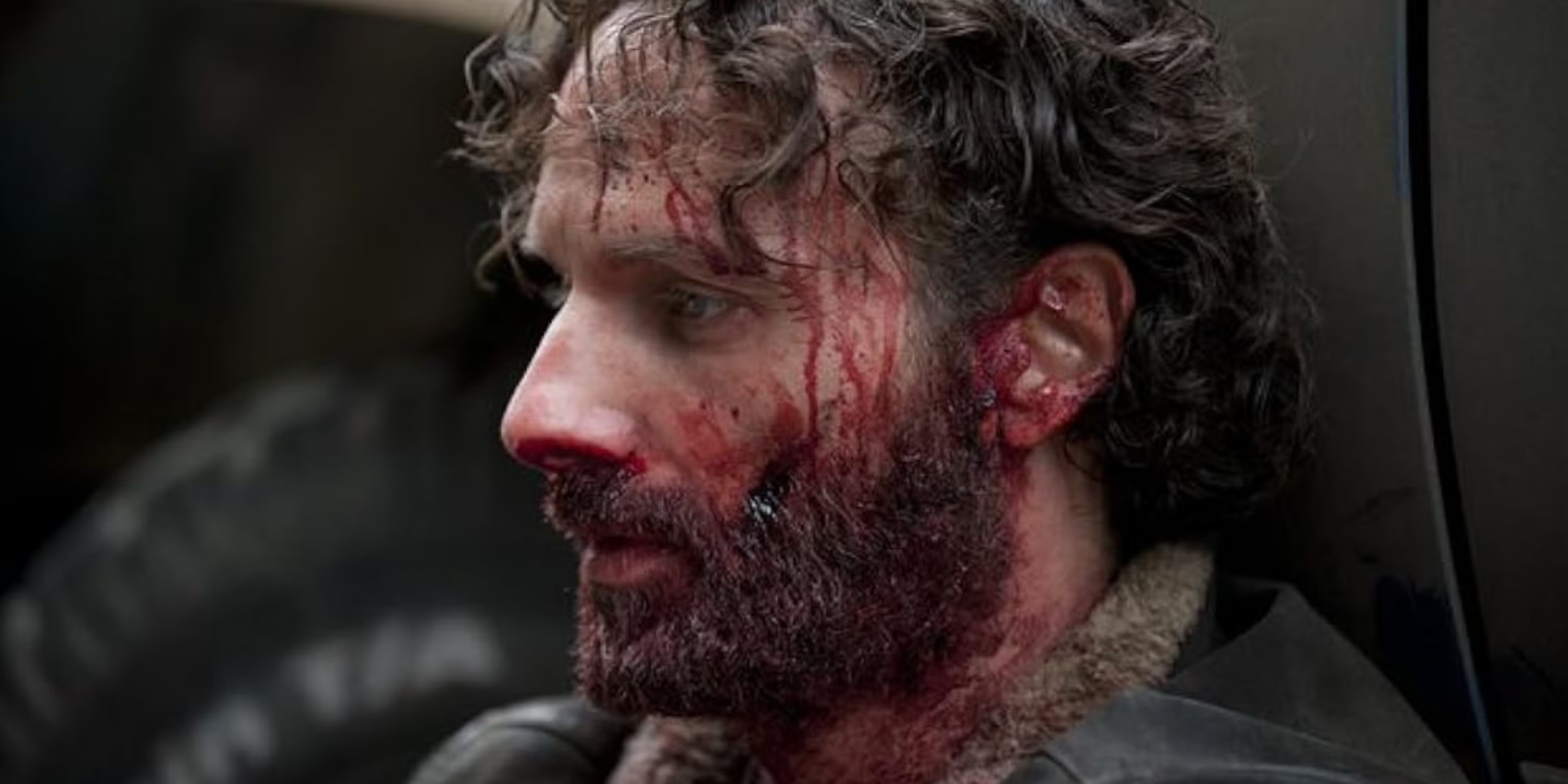
The Train Car Scene as It Actually Ended
The Season 4 finale, “A,” closes with Rick’s group reaching Terminus after months of separation, hunger, and constant movement. The place was supposed to be sanctuary, but the group quickly learns that Terminus is not a refuge. It is a trap, with survivors being held in train cars after being lured inside.
Rick, Carl, Michonne, Maggie, Glenn, Daryl, Sasha, and the others are herded into the cars together, cut off from the world and surrounded by enemies. The episode had spent most of its final stretch turning the road into a survival maze, and this ending compresses all of that dread into one locked room.
Rick’s response is not an escape plan. It is a declaration. Looking around the train car, he tells the group, “they’re screwing with the wrong people,” and the episode cuts to black moments later, leaving viewers to wonder how the survivors will get out.
Rick’s “they’re screwing with the wrong people” line is strongest when it feels like the only thing in the room that refuses to fold.
That is why the scene became so durable. Rick was no longer the frightened sheriff’s deputy from the pilot, still trying to understand a world that had already moved on without him. By Terminus, he had become someone who could look at impossible odds and turn fear into a threat of his own.
The Alternate Ending That Almost Existed
Scott Gimple later revealed that the ending was originally built around Morgan Jones. In that version, Morgan was already inside the train car, waiting for Rick’s group to arrive. After Rick delivered the line, Morgan would have smiled and answered, “yeah, they are.”
That would have connected the finale directly back to the pilot, where Morgan and his son Duane took Rick in after he woke up in the hospital. Morgan was one of the first people Rick met in the apocalypse, so his return would have given the episode a clean emotional loop.
The appeal is obvious. Rick has been fighting to keep his family and community alive all season, and Morgan’s survival would have proved that at least one old thread from the beginning still held. It would have turned Terminus from a dead-end into the place where Rick’s past walked back into his life.
But the scene would also have shifted the spotlight. Rick’s line was supposed to be the final note of the episode, and Morgan’s entrance would have changed that note from a declaration into a reunion. The audience would have been thinking about Morgan as much as Rick.
A Scheduling Conflict That Reshaped Rick’s Mythology
The reason the scene changed was practical rather than creative. Lennie James could not make the filming schedule work, so Morgan’s return was cut before production locked the ending. The writers still had the emotional idea, but the logistics did not allow it.
That production detail matters because it shows how much of a TV show’s mythology is built in rooms far away from the final edit. A line can feel inevitable on screen, even when it survived a near-death of its own. Sometimes an iconic moment is not inevitable at all; it is the version that remained after scheduling, budget, and story all collided.
It also saved Morgan’s return for a better narrative window. Instead of appearing as a surprise in Terminus, Morgan could disappear from Rick’s story for a while, letting his absence become part of the question. The show could use time to make his survival feel mysterious rather than merely convenient.
Why Morgan’s Later Return Worked Better
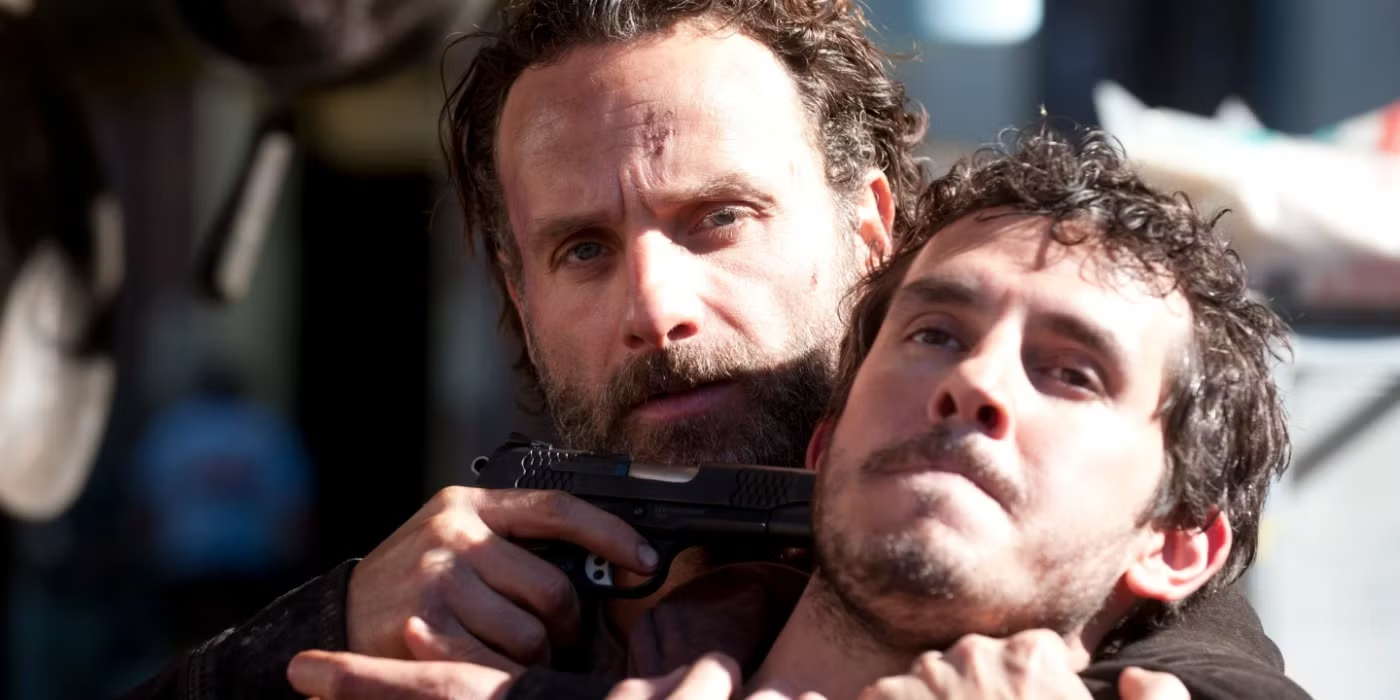
Morgan eventually returns in Season 5, Episode 16, “Conquer,” right as Rick is executing the cowardly Pete Anderson. That setup is much sharper than the cut train car reunion would have been. It places Morgan back in Rick’s orbit at the exact moment Rick’s leadership is being tested from within.
The later reunion carries more weight because the audience has time to wonder what happened to him. Morgan’s journey away from Rick becomes its own strange stretch of mythology, separate from the prison group and separate from the Terminus ending. When he finally returns, he is not just an old friend. He is a survivor who has been changed by the apocalypse in ways the others do not fully understand.
That matters because Rick’s Season 4 finale is about the moment he stops merely surviving and starts becoming dangerous to his enemies. Morgan’s arrival in Season 5 is about the cost of that transformation. One scene is about Rick claiming power. The other is about what that power has done to the people around him.
The cut version would have been a gift to fans. The aired version gives the show a cleaner climax.
What This Says About TV Cliffhangers
The alternate ending is fascinating because it shows how fragile iconic TV moments can be. A cliffhanger is built to create one clean question, and “A” needed the question to be simple: how does Rick’s group escape Terminus? Morgan’s return would have added another question, but it also would have softened the trap.
The aired version works because it gives the audience no comfort. Rick’s group is trapped, the enemy is still outside the frame, and the episode ends before anyone gets to breathe. The line is not a victory speech. It is a promise that the group is not going to disappear quietly.
A reunion after that line would have been satisfying, but it would have arrived too early. It would have told viewers, “you are not alone,” when the scene needed them to feel, “you are surrounded.” That difference is small on paper, but it changes the emotional temperature of the entire ending.



Comments (0)
Loading comments…