

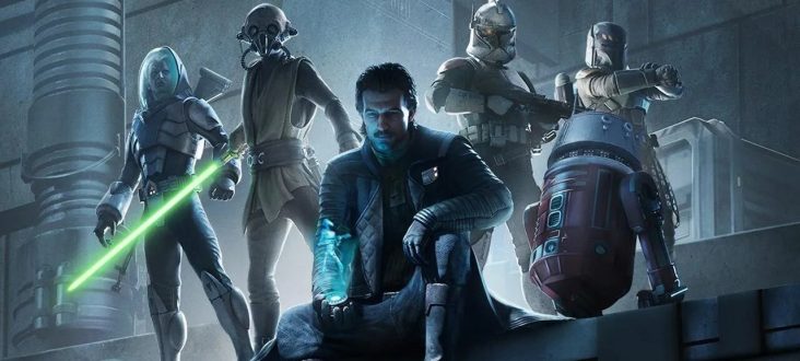
Star Wars Zero Company has exactly one Jedi Operator, and the game’s warning is blunt: if you treat her like expendable, you can end a mission with no Jedi support at all. That makes the Jedi less a permanent power fantasy and more a fragile resource you have to move, protect, and sometimes spend.
The answer to the obvious question is simple: Star Wars Zero Company is not giving you a stack of Jedi units to throw at the Empire. In the version of the game this warning describes, the Jedi Operator is the only one, so every fight has a hidden rule: keep her alive.
The Jedi Operator is the squad’s rarest resource
Star Wars Zero Company is a squad-based tactics game from 34BigThings, and that framing matters. The game is not built around a lone hero cutting through waves of enemies; it is built around a small unit making hard calls under pressure.
Zero Company’s Star Wars setting is already a good fit for that kind of tension. The galaxy is huge, but this story is interested in the pieces that fall through the cracks: clone troopers, scattered survivors, and one rare Jedi who can change the shape of a fight.
When a tactics game gives you only one Jedi, it changes the math. Cover, enemy focus, retreat routes, and ability timing all get a new priority.
“Be careful that nothing unfortunate happens to her!”
The joke is that it sounds like someone trying not to say “please don’t let her die,” and the point is that the game knows exactly how precarious she is.
The warning is funny because it is also fair
A lot of Star Wars games let players feel like the Force bends around them. Lightsabers flash, villains lose their nerve, and the galaxy seems to wait for the player to make a choice.
Star Wars Zero Company is doing the opposite: it is asking how much hope a tiny squad can carry when the Empire is closing in. That contrast is the hook. The Jedi Operator is not just there to drop a flashy ability and win the turn. She is the unit that can absorb attention, solve problems the clones cannot, and keep the team from being swallowed by the opening act of the Imperial era.
Zero Company turns Star Wars scarcity into tactics
The game sits in a familiar Star Wars lane, but not an overused one. Post-Order 66 stories have a built-in sense of loss, and tactics games are built around loss as a mechanic.
Zero Company makes those two ideas meet in the most painful way possible: the rarest symbol in the galaxy is also one of the most vulnerable pieces on your board. Modern tactics players are used to this language, from XCOM-style squad protection to roguelike campaigns where every death changes the next run.
Star Wars Zero Company is using that vocabulary, but swapping generic soldiers for a Jedi and making the stakes feel more mythic. It also arrives during a period when Star Wars games are trying on different shapes: big-budget spectacle, intimate narrative adventures, survival stories, and now squad tactics.
The danger is what makes the Jedi feel valuable
The practical lesson is not to hide the Jedi Operator forever. If you never use her, she becomes a liability, and tactics games punish hoarded advantages just as quickly as reckless ones.
The better move is to use her when she can bend the outcome, then pull her back before the enemy realizes how much she matters. That is where the game could be especially interesting: a Jedi who is too safe becomes decoration, while a Jedi who is too exposed turns every mission into panic.
The sweet spot is the middle. She should be valuable enough that you want to protect her, and dangerous enough that protecting her changes how you play.
The risk only works if the game is fair
There is a real concern here. Losing your only Jedi Operator could feel exciting if it creates a desperate, memorable turn, but it could also feel cheap if the game does not telegraph the danger or offer a way to recover.
In a Star Wars game, that matters because players arrive with strong expectations about Jedi power and survival. The fix is not to make her invincible, because that would erase the point. The fix is to make the risk readable: clear enemy intent, understandable failure states, and enough information for players to learn where the line between bold and stupid actually is.
What players should watch next
The next details to watch are less about whether the Jedi Operator is strong and more about how fragile she is. Does she have defensive tools, escape options, or team abilities that make her survivable?
Does the game let you plan around losing her, or does one bad order cost you the whole run? Those answers will tell you whether Zero Company is using its lone Jedi as a clever tactical constraint or just as a threat display.
Either way, the warning says plenty about the game’s temperament. The takeaway for Star Wars Zero Company players is simple: do not send the Jedi into the danger because she is the only one. Send her in because you have a plan for getting her back.




Comments (0)
Loading comments…