
A Christmas Threat and a Federal Case
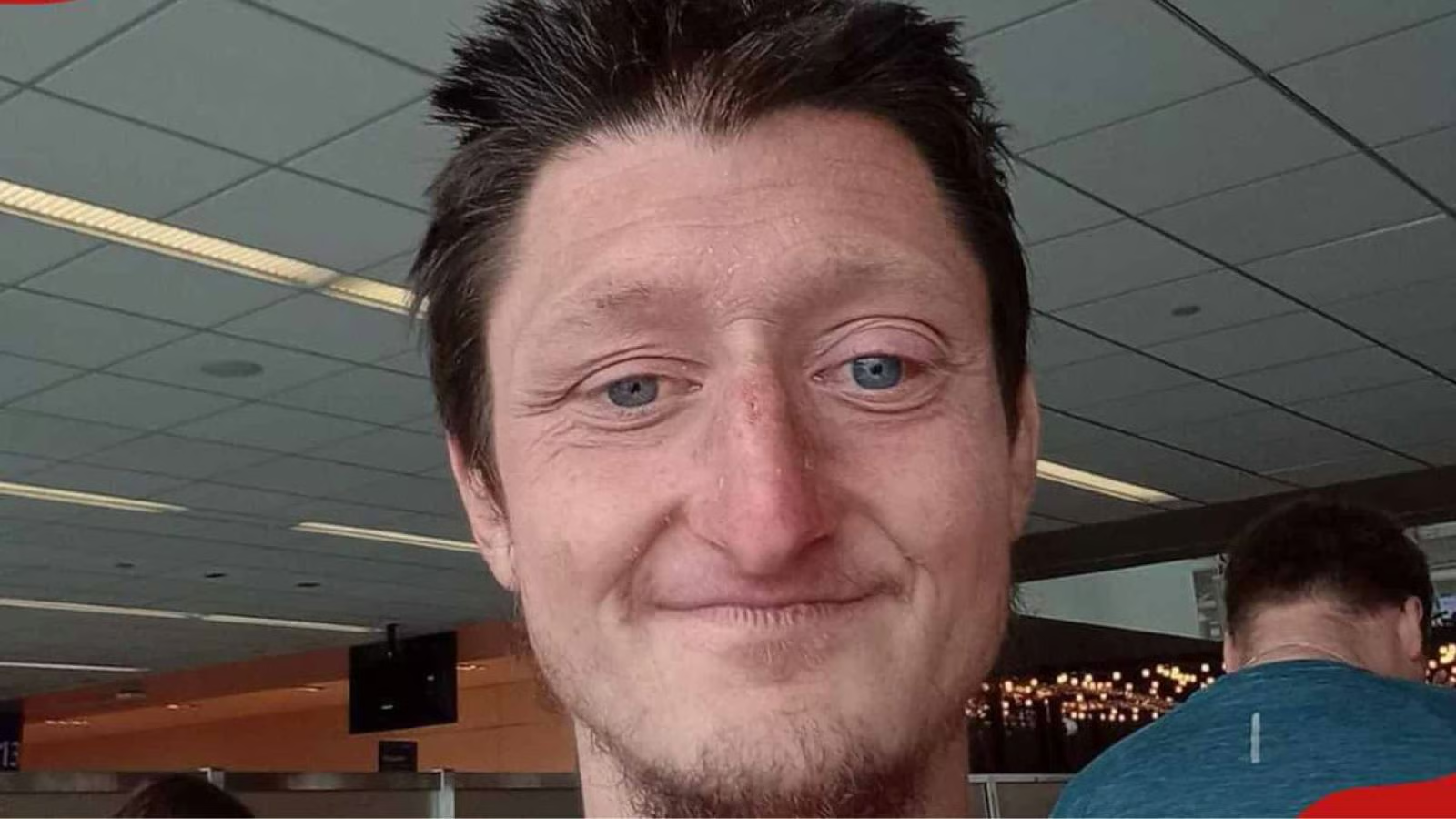
Daniel Larson is a free man. Sort of.
After spending over two years in federal custody following an April 2024 arrest, the TikToker walked out of court on July 21 after receiving a time-served sentence. Judge Regina Rodriguez handed down the ruling in Colorado, closing a legal chapter that began with bomb threats against the White House and FBI headquarters and ended with a single guilty plea to threatening an FBI agent on Christmas Day 2023.
Here's the thing about federal prison: it's a surprisingly effective content moderation strategy. For years, platforms struggled to manage Larson's erratic behavior, caught between his massive following and his obvious need for intervention. The Department of Justice didn't have that problem. They just needed one threat to an FBI agent to press charges that carried a potential 33-month sentence. For the creator economy, this case is a stark reminder that the legal system is the ultimate Terms of Service.

Larson's original indictment hit him with seven federal charges. Six of those involved the use or threatened use of explosive materials against locations including the White House, FBI headquarters, a Colorado courthouse, a nonprofit center, a state government building, and a college campus. It was a shocking escalation for someone known primarily for erratic livestreams and a decades-long documented history of mental health struggles.
The community that tracked his movements, often compiled on the subreddit r/Daniellarson, watched as the legal process ground forward. In April 2026, Larson took a plea deal, copping to a single count of transmitting threats in interstate commerce. The remaining six counts were dismissed as part of the agreement.
The Fine Print of Freedom
But "free" is a relative term. According to an eyewitness who attended the sentencing hearing, Larson received credit for time served and was ordered released into private housing with a caregiver. The arrangement was organized by a trust team, and Larson will be accompanied while in public.
He was sentenced to two years of supervised release. The conditions are strict: Larson must take all prescribed medication, submit to random drug testing, and hand over his phone passwords to probation officers. He cannot contact law enforcement agents named in the case, and his phone is subject to inspection at any time.
No fine was imposed, though Larson agreed to surrender a Motorola phone seized during the investigation, allowing federal authorities to dispose of the device. Prosecutors had asked the court to reduce Larson's offense level by three levels because he accepted responsibility and entered his guilty plea in time to avoid trial preparations. His plea agreement established an estimated sentencing range of 27 to 33 months, with prosecutors agreeing not to oppose a request for time served.

Accountability in the Creator Economy
Larson's case isn't happening in a vacuum. The same month he was sentenced, charges against streamer JiDion were dismissed, while other creators have faced similar legal reckoning. The legal system is increasingly becoming the default moderator for behavior that platforms either can't or won't handle.
For the business of online content, this is a bottom-line issue. Insurance, platform moderation, and legal teams are becoming as important as editing software for top-tier creators. Larson's case is the extreme end of a spectrum where mental health support and legal guardrails simply didn't exist. His sentence—structured reintegration with a caregiver and strict supervision—acknowledges the underlying issues that fueled the entire ordeal.
The official written judgment had not appeared on the publicly accessible court docket at the time of publication. But reports from inside the courtroom indicate Larson was set to leave federal custody on the same day as his sentencing. The conditions of his supervised release are strict enough to effectively bar him from the kind of unchecked, chaotic streaming that defined his online presence. The question isn't whether he'll be back online—it's whether the infrastructure now in place can prevent a repeat of the cycle that landed him in federal prison in the first place.



Comments (0)
Loading comments…