
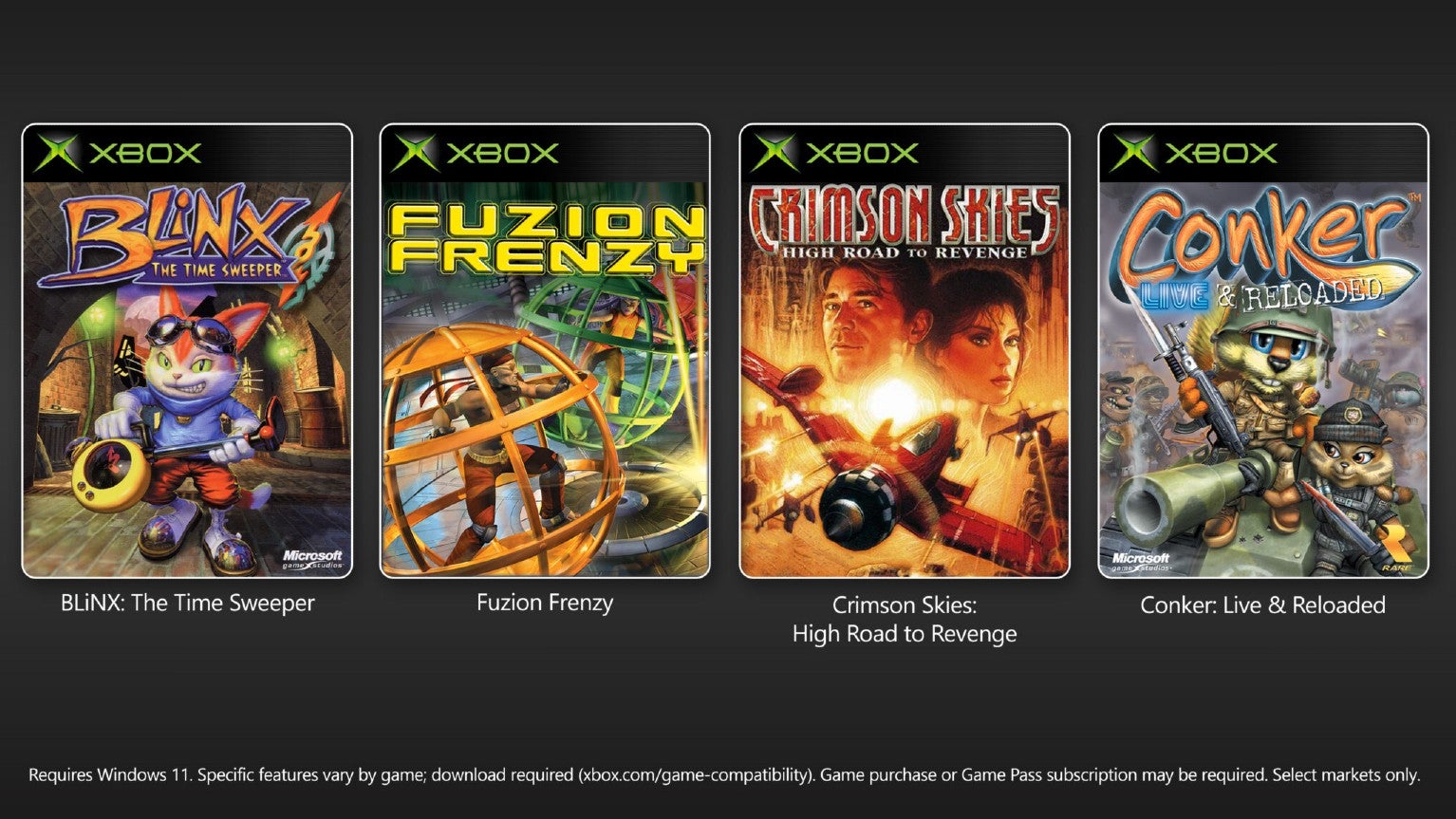
Xbox just did something preservationists have been begging for since the Series X launched: it's bringing original Xbox games to PC and handhelds. Not through emulation hacks or third-party workarounds — officially, with enhanced graphics, license transfers, and Game Pass integration. The first wave is small — four games — but the implication is massive. This is the first time Microsoft has treated its original library as a platform-agnostic asset rather than a console exclusive.
The Four Games Leading the Charge
Starting today, BLiNX: The Time Sweeper, Conker: Live and Reloaded, Crimson Skies: High Road to Revenge, and Fuzion Frenzy are available for purchase on PC and through Game Pass. If you already own them digitally on Xbox, the license carries over. No re-buy required. Jason Ronald, VP of next generation, called it "the beginning of a broader effort to preserve Xbox games from the past and bring them to PC over time." That phrasing — "over time" — is doing a lot of heavy lifting.
The enhancements are exactly what PC players expect: 4x resolution scaling, VSync, fullscreen and windowed modes, anisotropic filtering, and improved anti-aliasing. Achievements are coming "in the coming months," which is Microsoft-speak for "we're still building the backend." The games run through a new compatibility layer that maintains original gameplay logic while exposing modern rendering options. It's not a remaster. It's the original code running at resolutions the original hardware could never dream of.
Why This Shift Now
This didn't happen in a vacuum. Earlier this week, chief strategy officer Matthew Ball laid out the new doctrine: "to return [Xbox] to consistent growth, we need a reliable pipeline of exclusive games." He framed console purchases as life investments with real trade-offs, arguing players need a clear reason to pick Xbox. That's a notable shift from the "play anywhere" messaging of the Phil Spencer era. Bringing original games to PC seems contradictory — until you realize these aren't system sellers. They're preservation plays. They build goodwill. They keep the library alive on hardware people actually own.
"We are asking players to make an investment in our consoles. These investments are real; they involve trade-offs in life. Given this, we need to give players a clear reason to pick us."
Ball's comments clarify the strategy: new exclusives drive hardware sales. Legacy games drive ecosystem retention. The two can coexist.
Who Actually Benefits
PC players get native access to games that previously required an original Xbox, a 360 with backwards compatibility, or a Series X. Handheld owners — whether they're on a Analogue Pocket, an Android device like the AYN Odin, or a Steam Deck — get a curated slice of Xbox history without jumping through h Preservationists get an official commitment that the library isn't rotting behind a green paywall. And Microsoft gets to monetize assets that have been sitting idle for two decades.
The technical implementation matters here. These aren't streaming titles. They run locally. That means they'll work on a AMD-powered handheld just as well as a high-end desktop, provided the compatibility layer scales properly. Early reports suggest the 4x resolution toggle is the real star — Crimson Skies at 4K with anisotropic filtering looks like a different game, not just a sharper one.
The Preservation Trend Is Real
Xbox isn't alone in this. Nintendo's Switch Online service, Sony's PS Plus Premium catalog, and the entire PC retro ecosystem have proven there's revenue in legacy. But Xbox's approach is distinct: license portability across PC and console, no subscription required for ownership, and graphical enhancements that respect the original art direction. It's the most consumer-friendly model of the big three. Whether it scales beyond these four titles will determine if it's a pilot program or a platform pillar.
Healthy Skepticism Is Warranted
Four games. That's the launch lineup. Four. Jet Set Radio Future, Panzer Dragoon Orta, Otogi, Steel Battalion — none of them are here. Licensing hell is real, and Microsoft has been notably quiet about the roadmap. "Over time" could mean six months or six years. Achievements are delayed. The compatibility layer hasn't been stress-tested across the thousands of hardware configurations PC players actually use. And there's the elephant in the room: this initiative exists alongside a strategy that explicitly prioritizes console exclusives. If the next Halo or Gears never comes to PC day one, does Fuzion Frenzy at 4K matter?
What to Watch
The next drop will tell us everything. If Microsoft adds 10-15 titles by year-end with consistent quality, this becomes a legitimate preservation platform. If it trickles out one or two games per quarter, it's a PR gesture. Watch for licensing announcements — particularly around titles with expired music licenses or defunct publishers. Watch for community tools: mod support, ultrawide patches, input remapping. And watch whether Activision Blizzard's back catalog gets folded in now that the acquisition is settled. The original Xbox library is deeper than most remember. Microsoft just unlocked the door. Whether they keep it open is the only question that matters.



Comments (0)
Loading comments…