
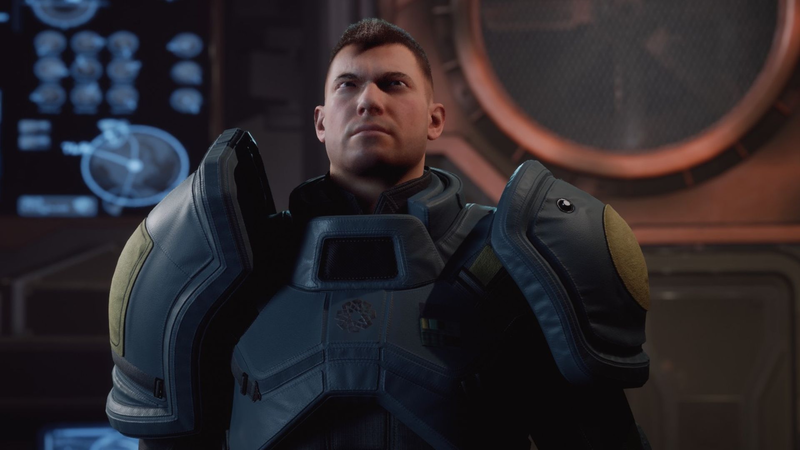
ZeroSpace Wants to Drag RTS Into the Present
Look, I love StarCraft II as much as the next person who’s lost a dozen ladder matches in a row. But let’s be honest: the real-time strategy genre has been coasting on legacy for a minute. New entries are rare, and the ones that do show up often feel like they’re trying to be a 2010 game with better textures. That’s why ZeroSpace, an upcoming RTS from indie studio Starcruiser Games, is turning heads—not just for its gameplay, but for how it’s trying to solve the genre’s biggest structural problems.
Announced earlier this week, ZeroSpace bills itself as a “modern RTS” that borrows the macro- and micro-management of classics like StarCraft and Age of Empires while adding systems designed to lower the skill floor without dumbing things down. Think of it as a game that wants to make RTS accessible to people who never got past the first campaign mission of Warcraft III, while still offering the depth that keeps pros grinding for years.
The Big Idea: No More “APM Gatekeeping”
Here’s the thing about RTS games that has kept them niche: they reward inhuman levels of actions per minute. If you can’t macro your economy while simultaneously microing a flanking maneuver, you lose. ZeroSpace is trying to fix that with a feature called “Strategic Pause.” Players can pause the action at any time—even in multiplayer—to issue orders, queue up builds, and survey the battlefield. The pause is simultaneous for both players, meaning nobody gains an unfair advantage. It’s a radical idea for a competitive RTS, and it’s the kind of thing that could finally let strategy, not speed, be the deciding factor.
The game also includes a “Commander” system, where each faction has a hero unit with unique abilities that level up over the course of a match. This isn’t new—Warcraft III did it, and Age of Empires IV has similar mechanics—but ZeroSpace ties it directly to the economy. Your Commander can build structures, buff nearby units, or call in orbital strikes, but using them effectively requires resource management, not just APM. It’s a small shift, but it changes the entire rhythm of a match.
How Did We Get Here?
Starcruiser Games is a small team of former Blizzard and Riot developers who saw the RTS genre stagnating. In a recent developer diary, they cited the failure of StarCraft II’s monetization model—free-to-play with paid co-op commanders—as a cautionary tale. “The RTS audience is loyal but small,” they wrote. “You can’t just sell them a $60 box and hope for the best. You need a live-service model that respects their time.”
That’s why ZeroSpace will launch with a battle pass system, cosmetic-only microtransactions, and a “Faction Pass” that unlocks new commanders and units over time. The base game itself will be free-to-play, with the option to buy a “Founder’s Pack” that includes early access and exclusive skins. This is a risky bet—RTS players are famously allergic to monetization that feels predatory—but Starcruiser is betting that transparency and player agency will make it work.
Key Detail: The Economy Experiment
One of the most talked-about features in ZeroSpace is its “Resource Grid.” Instead of mining gold or vespene gas from fixed nodes, each player’s base generates resources passively based on the number of “Refineries” they build. Refineries are placed on a grid, and their output depends on adjacency bonuses—similar to the district system in Civilization VI. This means players have to think about base layout from the first minute of the game, and it rewards careful planning over frantic clicking.
In practice, this could be a game-changer. It adds a layer of strategy that exists before the fighting starts, and it forces players to make trade-offs: do you build more Refineries for a stronger economy, or do you save space for defensive structures? The grid system also makes turtling harder, because you can’t just wall off a corner of the map and call it a day. Your base’s shape matters, and that’s something RTS has rarely asked players to think about.
The Bigger Picture: RTS in the Age of Live Service
ZeroSpace isn’t just another indie RTS—it’s a test case for whether the genre can survive in a market dominated by battle royales and hero shooters. The RTS audience has been shrinking for years, but it’s also incredibly loyal. Games like Age of Empires II: Definitive Edition still have active competitive scenes, and StarCraft II continues to get balance patches despite being a decade old. The problem is that no major publisher has been willing to take a risk on a new RTS IP. EA killed Command & Conquer, Microsoft only resurrected Age of Empires as a remaster, and Blizzard has moved on to Overwatch and Diablo.
That leaves room for indies. ZeroSpace joins a small but growing wave of RTS projects like Stormgate (from former Blizzard devs) and Immortal: Gates of Pyre. These games are all trying to modernize the genre while keeping its core DNA intact. The difference is that ZeroSpace is the most aggressive about changing the formula—Strategic Pause, the Resource Grid, and the free-to-play model are all high-risk, high-reward bets. If they pay off, we could see a mini-renaissance for RTS. If they don’t, it’ll be another cautionary tale for developers who think they can revive a dead genre.
What’s Next
Starcruiser Games has announced a closed alpha for early 2025, with a full release planned for later that year. The alpha will focus on 1v1 competitive play, but the devs have promised a full campaign, co-op modes, and a map editor at launch. For now, players can wishlist the game on Steam and sign up for the alpha on the official website. Whether ZeroSpace actually redefines RTS or just becomes another footnote in the genre’s long decline remains to be seen—but for the first time in years, I’m actually excited to see what happens next.



Comments (0)
Loading comments…