

PlayStation's shift away from physical media isn't a sudden pivot — it's a calculated survival strategy for a console business staring down $700 hardware bills and stagnant unit sales. Analysts frame the digital-only transition as a necessary bridge across what they're calling "the bad years" of elevated manufacturing costs, but the trade-off is measurable: every percentage point of physical market erosion accelerates the migration of price-sensitive players toward mobile and free-to-play ecosystems that require zero upfront investment.
The Analyst's Framework

The "bridge across the bad years" phrasing comes from a GamesRadar+ interview with an industry analyst who argues that eliminating disc drives and physical distribution infrastructure lets Sony maintain console pricing discipline while component costs remain inflated. The logic holds: physical games carry manufacturing, shipping, retail margin, and return logistics that digital SKUs simply don't. When a PS5 Pro launches at $699, every dollar saved on the software supply chain matters.
But the same analyst warns that "casuals and youngsters will drift off to mobile, PC, and free-to-play even faster" — a demographic observation backed by years of NPD and Circana data showing the 13-24 age cohort increasingly treats dedicated consoles as optional.
Why Physical Still Mattered

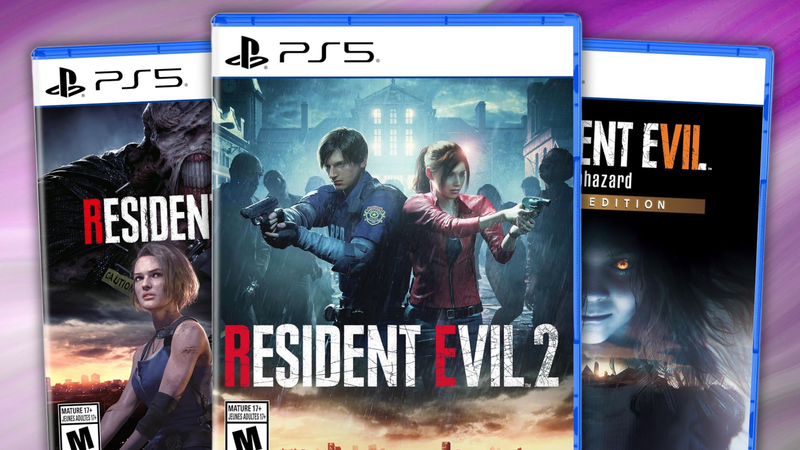
Physical media served three functions that digital doesn't fully replace. First, it anchored perceived value: a $70 disc on a shelf feels like an asset; a $70 license in a library feels like a rental. Second, it enabled the secondary market — trade-ins funded new purchases for budget-conscious households. Third, it kept retail partners invested in PlayStation shelf space, which doubled as marketing real estate for parents and gift-buyers who don't follow Direct showcases.
Removing discs eliminates all three. GameStop's declining relevance was already baked in, but Walmart, Target, and Best Buy lose a traffic driver. That matters less for God of War pre-orders and more for FIFA or Call of Duty impulse buys at checkout.
The Hardware Cost Reality
Sony's bill of materials hasn't normalized since 2020. The custom AMD APU, GDDR6 memory, and proprietary SSD controller that define the PS5 architecture still command premium pricing — and the Pro refresh adds a larger die and more memory on top. Microsoft absorbed similar pressure with the Series X|S split strategy; Sony chose a single high-end SKU and now a mid-gen refresh at a price point that would've been unthinkable in 2013.
Digital-only consoles shave $20-40 off BOM by dropping the optical drive, licensing fees, and mechanical assembly. At scale, that's tens of millions in quarterly savings. The PS5 Slim Digital Edition at $449 is the proof of concept: same silicon, lower box cost, higher attach rate for PlayStation Store purchases where Sony keeps 30%.
Who Leaves, Who Stays
The core PlayStation buyer — 25-40, high engagement, buys 8-12 games annually — isn't going anywhere. They've already migrated to digital for convenience. The loss is the household that buys one console and two games a year, often used, often for kids. That family compares a $450 console + $140 in games against an iPad they already own running Roblox and Fortnite for free. The math stopped working years ago; physical media was the last friction point keeping them in the ecosystem.
PC gaming absorbs the high-end defectors. Steam Deck proved handheld PC gaming works; Baldur's Gate 3 proved complex RPGs sell millions on desktop. The "PlayStation exclusive" moat narrowed when Sony started porting to PC two years post-launch. For the enthusiast who wants Spider-Man 2 at 4K/120 with ray tracing, a $1,200 GPU upgrade beats a $700 locked box.
The Mobile Acceleration
Mobile isn't just Candy Crush anymore. Genshin Impact, Honkai: Star Rail, and Wuthering Waves deliver console-adjacent production values on phones that cost the same as a PS5 but serve as daily drivers. Apple's Game Porting Toolkit and Qualcomm's Snapdragon Elite chips are closing the technical gap. For a 16-year-old whose primary screen is a phone, the console value proposition requires exclusive IP they can't get elsewhere — and Sony's first-party slate has thinned to one major release per year.
Free-to-play dominates playtime charts across every platform. Fortnite, Roblox, Warzone, Apex Legends — none require a disc, a subscription, or a $70 entry fee. They run on hardware families already own. PlayStation's own Helldivers 2 succeeded because it launched simultaneously on PC, not despite it.
The Preservation Problem
Digital-only creates a preservation crisis nobody has solved. Delisted titles — PT, The Crew, Concord — vanish from purchase history when licenses expire. Physical discs degrade, but they remain playable offline on original hardware indefinitely. The analyst didn't emphasize this, but collectors and historians see it as the silent casualty. Sony's PS Plus Premium streaming library covers some back-catalog, but streaming requires persistent connectivity and suffers from compression artifacts and input latency that local emulation doesn't.
What Comes Next
The PS6 will almost certainly launch digital-only. Microsoft's next Xbox reportedly follows the same path. The question isn't whether physical dies — it's whether the "bridge" holds long enough for hardware costs to normalize, or whether the casual exodus creates a death spiral: fewer units sold → higher per-unit costs → higher prices → fewer units sold.
Watch the attach rate. If PlayStation Store revenue per active user keeps climbing while monthly active users plateau, the strategy works for shareholders. If MAUs decline year-over-year for the first time since 2013, the bridge collapsed under the weight of the very audience it needed to cross it.




Comments (0)
Loading comments…