

Tom Holland just confirmed what fans suspected the moment the first Spider-Man: Brand New Day trailer dropped: the movie lifted "a lot of finishing moves" straight from Insomniac's PlayStation games. The actor revealed this on the red carpet at the film's July 27 premiere, telling IGN he'd actually been playing Marvel's Spider-Man 2 the night before because he couldn't sleep. This isn't a vague homage — it's a direct pipeline from game code to stunt choreography.
The Red Carpet Revelation
Holland didn't mince words. "A lot of the action. A lot of the finishing moves. I was actually playing the game last night," he said, describing how he turned to the game for inspiration while prepping for the premiere. IGN's report adds that much of the action and stunt departments were "huge gamers" themselves — a detail that shows in the final product. The backflip-off-a-building beat from the trailer? Frame-for-frame identical to Peter Parker's traversal animations in Marvel's Spider-Man and Marvel's Spider-Man 2.
 Man Brand New Day premiere">
There's a reason Spider-Man: Brand New Day feels so familiar.
Ever watched a movie trailer and thought, "I've done that before?"
That's exactly what happened when fans saw the action in Spider-Ma
 View on X →
Why This Now: The Influence Loop Has Flipped
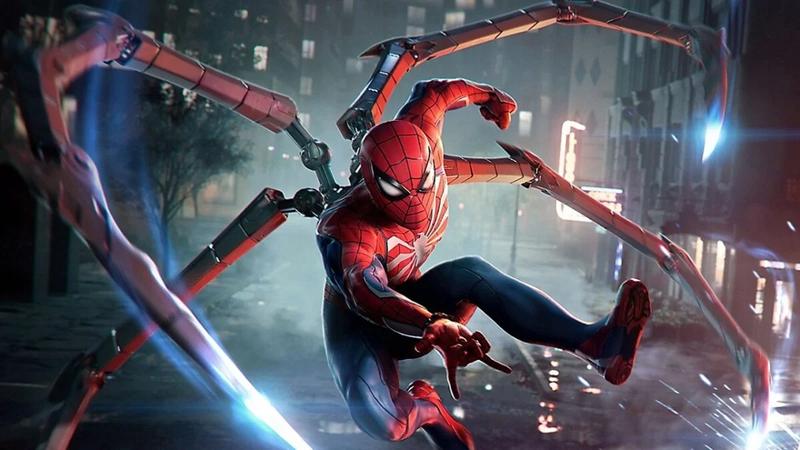
For decades, the flow went one way: movies defined the visual language, games imitated it. Spider-Man 2 (2004) borrowed heavily from Sam Raimi's films. Batman: Arkham Asylum leaned into Christopher Nolan's grounded aesthetic. But Insomniac's Spider-Man series (2018, 2020, 2023) did something different — it built a movement vocabulary so distinct and physically plausible that it became the new reference standard. The games didn't just adapt the movies; they improved on them. Now the movies are adapting the games.
This shift reflects gaming's cultural ascent. When a stunt team needs to know how a superhuman body moves through urban geometry, they don't storyboard from comics anymore — they load up the latest Insomniac title. The games have done the R&D: thousands of animation cycles, physics simulations, and playtest iterations refining what "feels right" for a web-swinger. Hollywood is just reading the results.
What This Means for Game-to-Film Adaptations
The Brand New Day approach suggests a new model for adaptations: don't just adapt the story, adapt the systems. Insomniac's combat — the aerial juggles, the web-yank finishers, the environmental takedowns — is inherently cinematic because it was designed to be readable at 60fps from a player-controlled camera. Translating that to film requires stunt performers who understand the logic of the moves, not just the look. Holland's comment about the stunt team being gamers is the key. They're not copying animations; they're executing mechanics.
Contrast this with earlier Marvel films where Spider-Man's movement often felt weightless or over-CGI'd. The Insomniac influence grounds the action in a tangible physical grammar — the same grammar players have internalized across three games and hundreds of hours.
The Broader Trend: Games as Primary Visual R&D
This isn't isolated. The Last of Us HBO series leaned hard on Naughty Dog's motion capture performances. Fallout replicated Bethesda's environmental storytelling grammar. Arcane translated League of Legends character silhouettes and ability VFX into animation language. Studios are realizing that modern AAA games are effectively pre-visualization engines with millions of playtesters. The "finishing moves" Holland describes are just the most visible tip of a massive iceberg: games are now where blockbuster action choreography gets prototyped.
Insomniac specifically has become a reference library. Their Spider-Man traversal system — the corner physics, the swing arcs, the landing recoveries — represents thousands of developer-hours solving "how does a human body move at 60mph through Manhattan?" Sony Pictures didn't need to solve it again. They just needed to watch.
Skepticism: Does It Make a Better Movie?
Here's the friction: movement vocabulary isn't storytelling. Brand New Day sits at 90% on Rotten Tomatoes and a 7.1 average — solid popcorn numbers, but right in line with Holland's previous entries. The Insomniac moves look great in trailers. Whether they serve character arcs, thematic beats, or emotional stakes is a separate question. A perfect web-yank finisher doesn't fix a weak third act. There's also the risk of fan service eating narrative: when a stunt exists because "players will recognize it" rather than "Peter Parker would do this here," the movie becomes a highlight reel.
And let's be clear — Insomniac's animations were built for player agency. The satisfaction comes from you pressing the button. Watching Holland do it is vicarious by definition. The games understand this; the movies are still learning.
What Comes Next
Expect this pipeline to formalize. Sony has every incentive to tighten the loop between PlayStation Studios and Sony Pictures — shared motion capture libraries, joint pre-vis teams, stunt coordinators who consult on game combat design before it ships. Other publishers are watching. Microsoft's Xbox/TV division, Ubisoft's film arm, even Nintendo's deepening media push — they'll all want their games to be "film-ready" at the systems level.
For players, the takeaway is simpler: the moves you've been pulling off for years just got canonized on the big screen. The backflip off the building? That's yours. The web-yank into a kick? That's yours too. Insomniac wrote the language; Hollywood finally learned to speak it.
There's a reason Spider-Man: Brand New Day feels so familiar.
Ever watched a movie trailer and thought, "I've done that before?"
That's exactly what happened when fans saw the action in Spider-Ma
View on X →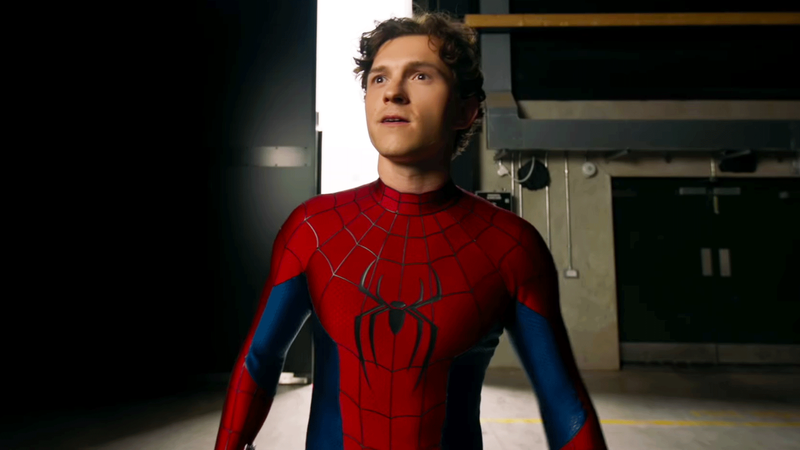

Comments (0)
Loading comments…