
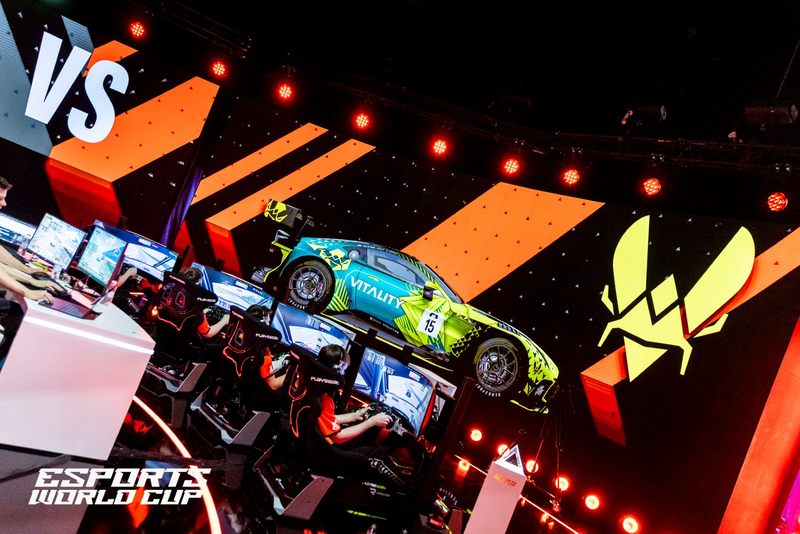
French esports organization Team Vitality has officially pulled the plug on its RENNSPORT sim racing division, releasing its entire roster and citing a broken foundation in the sim racing esports ecosystem. The move, announced Monday, comes just as the Esports World Cup 2026 kicks off—a tournament that notably dropped RENNSPORT from its title lineup this year.
“After more than two years, it is unfortunately time for us to say farewell,” Vitality wrote in a statement. “The current sim racing esports ecosystem no longer has a foundation within which teams can sustainably operate.” The organization released drivers Marcell Csincsik, Erhan Jajovski, Thibault Cazaubon, and Jiri Toman, though it will continue fielding a Gran Turismo squad at least through the end of the year.
A $500,000 Lifeline That Ran Dry
Here’s the thing about sim racing esports: it’s always been a niche within a niche, surviving largely on the goodwill of a few deep-pocketed organizers. For RENNSPORT, that goodwill came in the form of the Esports World Cup, which featured the title in 2024 and 2025 with a $500,000 prize pool each year. That cash injection wasn’t just prize money—it was the oxygen keeping the competitive scene alive.
But RENNSPORT’s viewership never broke out. At EWC 2025, the sim racing competition peaked at just 9,482 viewers, the lowest of any title at the event by a wide margin. Compare that to League of Legends or Counter-Strike, and you start to see why the Esports World Cup organizers decided to cut RENNSPORT from the 2026 lineup alongside another foundational title: StarCraft II.
From 12 Teams to 8 to Zero
The numbers tell a grim story. In 2024, RENNSPORT had 12 competing teams at the Esports World Cup. By 2025, that number had shrunk to just eight. Without the EWC’s Club Championship incentives—which reward organizations for fielding teams across multiple titles—there’s little financial reason for major esports groups like Vitality to stay invested.
Vitality’s RENNSPORT team had actually performed well, finishing second at EWC 2024 and third at EWC 2025, plus a second-place finish in the Esports Racing League Grand Final. But strong finishes don’t pay the bills when the ecosystem underneath them is collapsing. “Despite our optimism and ambition to elevate the space, we came to the realization that the plans we originally laid out would no longer be attainable,” the organization said.
The Bigger Picture for Sim Racing Esports
Vitality’s exit isn’t just one team leaving—it’s a signal that sim racing esports may be hitting a structural ceiling. The genre has always struggled with the same problem: it’s expensive to compete at a high level (rigs, wheels, pedals, monitors), the viewership is fragmented across multiple titles (iRacing, Assetto Corsa Competizione, RENNSPORT, Gran Turismo), and the biggest tournaments are dependent on third-party organizers rather than a unified league structure.
Compare this to something like Rocket League or Valorant, where developer-backed circuits provide a stable calendar and guaranteed prize pools. Sim racing has no equivalent. RENNSPORT itself is still in early access, and while the developer has talked about building an esports ecosystem, there’s no sign of a sustainable revenue model for teams.
What’s Next
Vitality will keep its Gran Turismo players—Kylian, Antonio, and Kaj—on the payroll through the end of the year, suggesting the organization still sees some value in console-based sim racing. But without the EWC’s financial support, RENNSPORT’s competitive future looks uncertain. Other teams in the space will be watching closely: if a major organization like Vitality can’t make the math work, who can?
For now, the sim racing esports scene is left with fewer teams, fewer tournaments, and a lot of questions about whether it can survive without a sugar daddy tournament series. The drivers themselves will likely land elsewhere—top sim racers are always in demand—but the infrastructure that supported them is crumbling.



Comments (0)
Loading comments…