
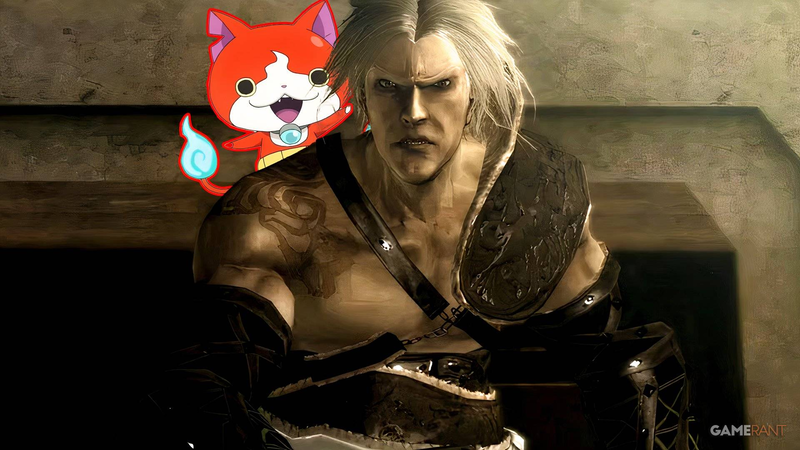
Five open-world RPGs that time forgot are still sitting there, fully playable, waiting for anyone willing to look past the usual suspects. Dragon Quest Builders, Nier Gestalt, Arcanum: Of Steamworks and Magick Obscura, Ultima 7: The Black Gate, and the Yo-kai Watch series each do something the heavy hitters don't — and in some cases, do it better than the games that replaced them.
The Sequel Shadow
Dragon Quest Builders got buried the moment its sequel launched. DQB2 polished the sandbox l The original divides its campaign into four is
 olated chapters, each forcing a fresh start with real stakes and a compact story that doesn't overstay its welcome. Combat isn't an afterthought here — it's a genuine threat. If you want a structured adventure that respects the Dragon Quest lineage more than the infinite creative mode its successor became, the first game is the one to play.
The Father Who Burned The World
Nier Gestalt — the version the West got in 2010 starring an aging father instead of a teenage brother — tells a story that still hits harder than most modern writers manage. The remaster Nier Replicant ver.1.22474487139... brought the sibling dynamic to North America, but it also erased the specific gri
 ef of watching a broken-down man dismantle everything to save his daughter. The gameplay hasn't aged well. Fetch quests drag, performance chugs, and the graphics were middling even then. But the narrative core remains untouched by time. If you still have a PS3 copy, that's the version worth revisiting. The remaster is fine; the original has teeth.
Magic Versus Machines, No Compromise
Arcanum: Of Steamworks and Magick Obscura looks every bit the 2001 isometric RPG it is, and the combat was clumsy even at launch. Push past that and you find one of the most reactive worlds the genre has ever produced. Playing a mage versus a technologist doesn't just change your spell list — it rewrites how NPCs treat you, which quest solutions exist, and what the world even allows you to attempt. The magic-versus-technology conflict isn't flavor text; it's a systemic rule set t
 hat permeates every interaction. Few modern RPGs with ten times the budget offer that degree of consequence.
The 1992 Blueprint Everyone Copied
Ultima 7: The Black Gate was Skyrim thirty years early. A living schedule for every NPC, objects you could pick up and move, a world that simulated itself whether you watched or not — Richard Garriott's team built systems that designers are still chasing. The writing holds up, too: a kingdom shedding magic for a suspiciously familiar religious movement, told through dialogue that respects the player's intelligence. The catch is brutal. Without mods like Exult, the MS-DOS original fights you at every turn: resolution, input, pathfinding, save management. It's a museum piece you have to restore before you can appreciate. But the architecture u
 nderneath is the foundation half the genre stands on.
From Phenomenon To Footnote In Five Years
Yo-kai Watch looked positioned to challenge Pokémon around 2015. Level-5 flooded the 3DS with sequels and spin-offs, each expanding the hub-based exploration and iterating on the battle system. Then the Switch arrived, global releases lagged by years, and Yo-kai Watch 4 never left Japan. The games are still there — charming, accessible, with a distinctly Japanese folklore flavor the competition lacks. They're not traditional open worlds, but the later entries push closer. In a healthier timeline, this series would be entering its sixth generation. Instead, it's a case study in how platform transitions and localization delays can kill momentum faster than bad design ever could.
Why These Slipped Through The Cracks
Sequels that improve quality of life often erase what made the original distinct. Remasters replace the version people actually played with a "definitive" edition that changes the protagonist's age and rewrites the emotional core. Games from 2001 require technical archaeology just to launch. And a franchise aimed at children lives or dies by shelf space at Target — if the hardware cycle turns, the audience vanishes before the next entry arrives. None of these failures are about quality. They're about timing, platform holders, and an industry that only remembers what's currently marketable.
The Ones That Fight Back
Every game on this list has a barrier. Ultima 7 demands modding knowledge. Arcanum demands patience with 2001 jank. Nier Gestalt demands a PS3 or an original Xbox 360 disc. Yo-kai Watch 4 demands Japanese literacy or import patience. Dragon Quest Builders demands accepting a structure the sequel "fixed." That friction is exactly why they're still worth playing. The games that survive purely on accessibility tend to be the ones that sanded off their own edges. These didn't. They kept their weirdness, their difficulty, their specific vision — and that's why they feel like discoveries instead of products.
Pick one. Emulate, mod, track down a disc, or import. The worlds are still there, exactly as they were built, waiting for someone who doesn't need a remaster to tell them it's okay to play something old.

Comments (0)
Loading comments…